Showing posts with label Wayne. Show all posts

Tuesday, 4 November 2014

Maths Maze Game Assignment Progress Week 2


Game Design Doc

Week 2 Lesson 1 November 3rd:

By the end of this lesson I aim to have finished many of the sprites that I will use in game. I have currently completed the main character sprite and so the priority for this lesson will be enemy sprites and walls and environment sprites. I have managed to create a decent wall sprite and a detailed enemy sprite. I spent around the entire lesson of three hours on creating the enemy sprite. My focus is to create exciting and interesting main character and enemy sprites to engage and immerse the player.

Here is a screenshot of some of my sprite creation, it is the sprite of a cyborg teacher. Here you can see I used shapes to form a basis for the design and then used brushes to build up some colour and shading for each part. I made each part of the sprite individually so that I can modify them at will and this will also help with animation so that I can edit parts of the sprite without having to create a whole new one.

I created a basic wall sprite that can be used as a basis for any other wall sprites that I want to use. I then created neon coloured wall sprites that set the scene of a futuristic school with such things as cyborgs and robots.

The enemy cyborg teacher sprite as I am making it and when it is complete (below)


Wall sprites (below) basic wall, neon wall green, neon wall green (flipped) You can see how the two green walls would interlink together creating a pattern. This was intended to appear as if some sort of power supply is running through the walls. 


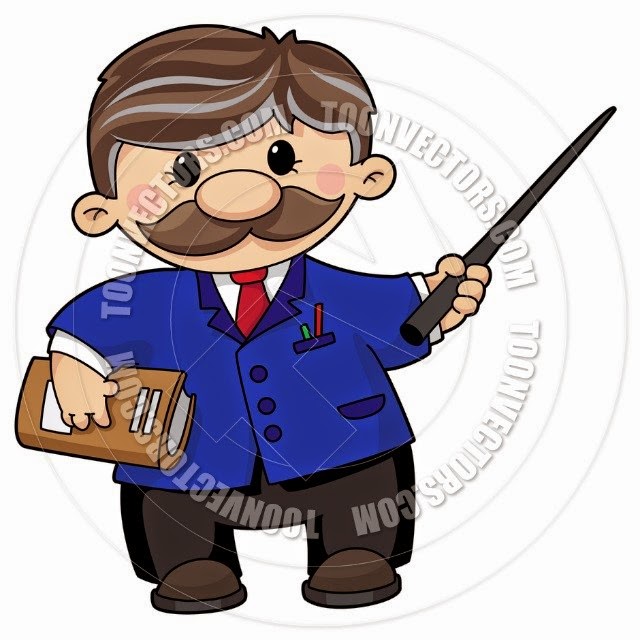
Below are some images I used for inspiration for my enemy teacher sprite. You can see the likeness to the teacher with the moustache.


Week 2 Lessons 2 & 3 November 4th & 5th:
 
For these shorter lessons I am continuing on with creating sprites. I have nearly created all the sprites that I need for the enemies and characters. If I have more time left over in later stages I will create boss sprites for boss levels, but my main priority is to create a working game with some attractive sprites first. I first re-skinned my enemy sprite to create a similar sprite that was easy and quick to make but adds some variety in enemy type. I did this by adjusting proportions and changing certain features and changing the colours of the sprite. This has saved lots of time than if I created a whole new sprite. (Below) The Enemy Sprite (Alternate Skin)


.
This is the process of me drawing a sprite. The sprite is a corner wall part that is meant to resemble a tesla coil.


As you can see I start by drawing a basic outline for the bulb part and the nucleus part. It is intended to look like a tesla coil which I will add detail in later. At this point I actually lost my work. I saved my work in a different file by accident and could not find which file I had saved it to. This meant that I had to start again on this design and wasted valuable time that could be used in Game Maker.
I then added in some detail to make it look like the electrical energy moving through the sphere. I then grouped together everything I had done and made it slightly transparent to give the impression that the it is behind glass.
 
Next I added an extra layer for the outline and some glare effects on the glass to make it look more 3D and realistic.


I then created a base for the design with a lightning bolt on it. This is to signify that in game this sprite will be used to shoot lightning bolts around the level that the player must avoid. They will look much like the lightning bolt on the base.

Finally I added some more colour to the sprite with grey in the box and blue and red microchips. This sprite is now complete and can be put into Game Maker.

I then copied and scaled up the lightning bolt to create a separate sprite that will serve as the lightning that jumps between tesla coils.

Here are any leftover sprites that I created for the game.


Wednesday, 1 October 2014

Computer Game Genre's Week 2

Computer Game Genre's Sam Bizley


Genre name

Genre description

Genre example

Tower Defence

Plants vs Zombies


Kingdom Rush


A game that revolves around defending a certain point or perimeter on the map. It is usually played from a “bird’s eye” perspective and can be played on a PC, but is mainly played casually on a mobile phone or similar device. Players usually have to survive each round by preventing the enemies in the game from reaching a certain point.
 
 It is a sub-genre under Strategy games and is very much aimed at the casual games market. Many of these games are free on the Apple Appstore or very cheap and often use monetisation to get their profits. Examples of this game are Plants vs Zombies, Kingdom Rush, Fieldrunners 2.

Plants versus Zombies is a tower defence game developed by PopCap for IOS, android and PC. It uses a slightly unorthodox grid based view where the aim of the game is to defend your garden from invading zombies.
 
You do this by using a budget of “Sun Power” to place various Plants on the grid which will defend against the zombies. It is more of a simplified version of the tower defence genre, but still uses the basic mechanics of defending a perimeter with stationary “towers” and survive the round gameplay.
 
This game is aimed at all ages. It uses children friendly images and simple gameplay but can still provide a substantial challenge to adults and children alike.

Beat ‘em up

Double Dragon

Castle Crashers


Usually a Sidescroller game where the objective is to fight and defeat all the enemies on the screen to progress to the next screen. There are traditionally no platforming elements and all the gameplay revolves around fighting enemies. The game sometimes incorporates power ups or health ups into the game.
 
This style of games was most popular in the 80’s and 90’s and was used in arcade cabinets. Back then it would have been targeting towards young to teenage kids who would go to the arcade or buy it for their home console. Today though, it is marketed towards those same people years later as nostalgia for their childhood memories. There are of course people new to these games but it is a far less popular genre now than it was in the past.
 
Examples of this genre are Double Dragon, Castle Crashers and Shank.

Caste Crashers is a more modern iteration of a beat 'em up game. The gameplay is heavily multiplayer and has four knights trying to fight against hordes of enemies to recover a mystical gem and save several princesses.

The game is a beat 'em up game because it presents hordes of enemies that must be defeated before progression to the next screen or set of enemies. It also incorporates RPG elements as players are able to improve their abilities as they gain experience.

This game is aimed at all audiences which is unusual for a beat 'em up. It's use of childlike characters makes it accessible to all ages and genders.

Roguelike

Rogue Legacy
Moria
The Binding of Isaac


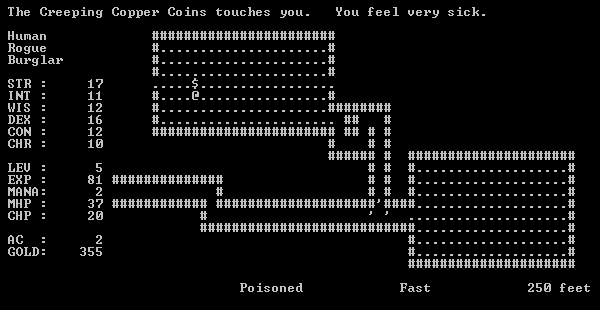
The term “Roguelike” has changed in meaning over the years but it mainly revolves around certain principles. These principles are Procedurally generated levels ie the experience is different every time. Permanent death ie that when a game over is reached you must start a new game from the very beginning. Finally in more traditional Roguelikes they are usually based around exploring some kind of dungeon or area.
 
Roguelike games can have a variety of other genre elements, and usually feature turn based strategy gameplay. Older examples of this genre are Moria(1983) inspired by J.R.R. Tolkien’s fiction and dnd(1975) which was conceived from the original table top game Dungeons and Dragons.
 
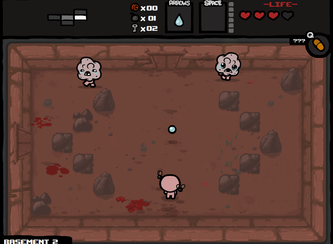
More modern examples of the genre which are more progressive are Rogue Legacy(2013), Risk of Rain(2013) and The Binding of Isaac(2011). In all of these games you have the three main principles of a Roguelike with other gameplay elements added on.

Faster than Light (FTL) is a turn based strategy roguelike game. You are the captain of a spaceship and you pilot through space trying to collect scrap to upgrade your ship and find new crew all whilst fleeing the enemy rebel fleet.
 
Your aim is to upgrade your ship enough so that as you progress along increasingly harder sectors you will be able to survive, and once you reach the last sector fight and defeat the rebel flagship in an extremely difficult boss battle.
 
The game is incredibly difficult and in my personal experience I have only been able to complete the “easy” mode about 5 times in around 150 tries. But it has a distinct addictiveness to it, and it always feels like victory could just be around the corner.
 
The game uses a real time/turn based strategy system as its approach to combat. You can control your crew and all your various ship systems ie weapons, shields, engine, hacking etc in real time, but you can also pause the game at any time to think about exactly what you are going to do.
 
The game is accessible to all ages, genders and ethnicities but because of its space exploration theme it is targeted more towards those people who grew up in the 80s when there was a large amount of media created under the genre of Sci-Fi. Since there has never really been a popular Star Trek game or similar iteration, this game scratches that itch rather well.

Survival Horror

Resident Evil 4
Amnesia: The Dark Descent
Alan Wake


Survival Horror is a genre where you are usually just a lone single character and you must struggle against overwhelming odds. The situation usually presented is like those in horror films, with some sort of unknown enemy trying to find and kill you.
 
The player is often at a distinct disadvantage to the enemy that they are fighting, and usually have to manage very limited resources just to stay alive. The game attempts to create a feeling of suspense through constantly being a moment away from death.
 
This game is aimed more towards mature audiences as it usually has very adult subject matter and the feeling of fear it creates may disturb younger people. Some examples of this game genre are Resident Evil, Amnesia: The Dark Descent, Outlast, Alone in the Dark, Alan Wake.
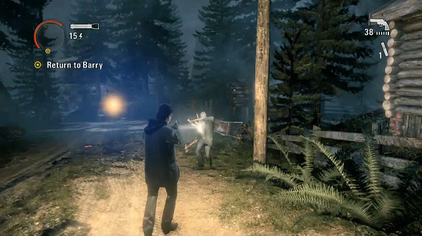
Alan Wake is a game made for Xbox 360 and PC in 2010 developed by Remedy Entertainment. The game revolves around Alan Wake a crime fiction novelist who's wife disappears mysteriously on a vacation together.

The gameplay consists of using light as a weapon to weaken "shadows" and finishing them off with firearms. This game is survival horror because you are forever being chased by a dark presence more powerful than yourself and resource management is key to surviving. After major encounters, you nearly always feel that you barely had enough resources to survive, which is synonymous to the survival horror experience.

This particular game does not feature as much mature content as other survival horror games but there is still a heavy theme of disturbing horror so is not suitable for young children. Otherwise this genre is aimed at all people as it features very cinematic, engaging story telling throughout.

Simulation
The Sims 4
Zoo Tycoon 2


A game that aims to simulate, usually realistically, some activity(ies) from real life. This can be considered potentially one of the largest genres as many games could be viewed as simulating real life. However the genre is usually attributed to games that are slow paced management games, such as the Sims, Civilisation or Zoo Tycoon.  Simulation games often include other genre’s elements such as RTS and RPG games.
 
This genre is accessible to all age ranges as they have certain simple aspects but a level of complexity as well.

Zoo Tycoon is a game where you must build up and manage your own Zoo. You are given a budget and you must bring in animals, breed them, hire and fire staff and build enclosures and tourist buildings to create a commercially successful zoo.

 The success of your zoo depends mainly on the happiness of your visitors. The happier your visitors, the more visitors will come to your park, the more money from ticket sales you gain. This customer satisfaction is gained from showcasing exciting animals at your park and creating tourist buildings.
 
This game falls into the Simulation genre because it attempts to realistically replicate the running of a real life zoo.

Rhythm

Guitar Hero
Parappa the Rappa


A genre where the player must use rhythmic timing to press buttons corresponding to instructions on the screen to complete a level or a track. This genre is usually quite fast paced and often uses some kind of imitation, instrument controller to play the game.
 
This genre is aimed mainly towards a young audience but it encourages, especially with multiplayer functionality, families and groups of friends to all play the games together and so appeals to a wide range of audiences.
 
Examples of this genre are Parappa the Rappa(1996), Rockband(2007), Dance Dance Revolution.

The Guitar Hero series is an example of a rhythm game. It attempts to simulate the playing of lead, bass or rhythm guitar in various rock songs. The game uses a guitar style controller and the game is played by matching notes on the screen with coloured buttons on the fret board, whilst strumming the “string” part of the controller in time with the music.
 
 The aim of the game is to get through the song with the highest possible score and a “lose state” is reached if the player consistently misses notes and upsets the crowd. Score is based on building up strings of notes hit, and then using a special bar built up throughout the song that multiplies the score for successful notes hit.
 
 The game is targeted mainly towards more casual players who don’t have experience with real instruments but who wish to experience the same feeling. The game inspired many people to buy music and even take up the instruments used. The guitar hero series later added drum set and microphone controllers.

MMORPG Massively Multiplayer Online Role Playing Game

World of Warcraft
Guild Wars 2


An MMO is a game that is played online with thousands of other players all interacting in some way. An RPG is a game where you create a persona or avatar for yourself and your goal is to continuously improve that character’s skills and abilities.
 
So an MMORPG combines these elements.
These type of games usually have some sort of annual/monthly subscription fee that the player must play in order to access the game. They feature very large open worlds that have several hundred people playing online at any one time on a particular server. All of the players occupy the same world so are free and open to talk to each other and complete quests or explore together.
 
Examples of this genre are World of Warcraft(2004), Guild Wars 2(2012), Lord of the Rings Online(2007).

World of Warcraft is an MMORPG released in 2004 by Blizzard Entertainment. It has a fantasy theme to the game and features a very large fictional map and many different fictional races and cultures.

It is played on various servers where thousands of people can interact with one another in the game universe. The gameplay consists of various quests given by NPCs and interactions that, when carried out, yield rewards such as experience, gold, gear etc.

This game is not targeted towards a particular age range, gender or ethnicity and there are all kinds of people that play this game. The game focuses on building up a fantasy persona that represents you in game. That way it is a much more welcoming and tolerant universe that encourages community.

Stealth
Dishonored
Hitman: Absolution


Stealth games can use other genre elements such as Action or Puzzle but they always adhere to the principle of avoiding enemies.
 
Usually the player controls a single agent and is usually very isolated. Their mission is often to infiltrate some area while avoiding detection. Some stealth games have you avoid several guards on your way to assassinating a single target and games like Thief have you steal a specific item or items instead.
 
Some games use shooting or hand to hand combat elements to compliment and add to the stealth gameplay. Some games from the stealth genre are Splinter Cell, Thief, Dishonored, Hitman.

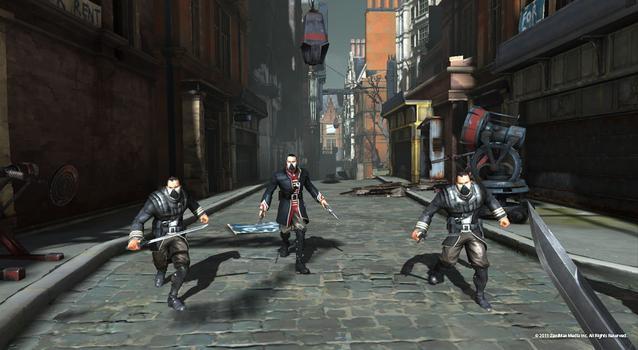
Dishonored is a stealth/combat game where you are given missions to assassinate specific targets while attempting to remain undetected. The game can be played without the use of stealth but players who use stealth well are rewarded.

The game uses special abilities such as the "blink" ability, which is a short teleport, to add to the basic structure of a stealth game.

Because of the games theme of violence and assassination it is clearly targeted towards a more mature audience. It has an 18 rating in the UK and Europe.

Fighting games

Tekken 6
Street Fighter III

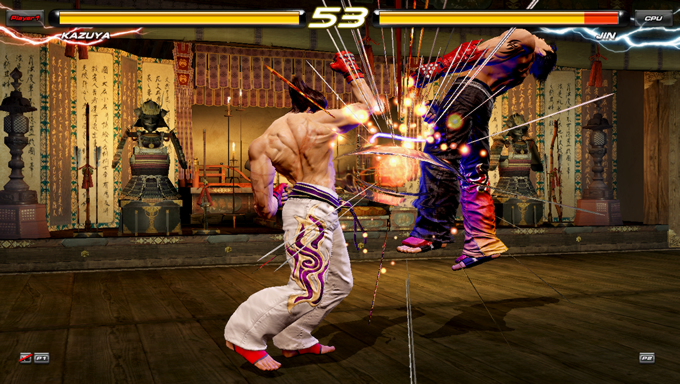
Fighting game are video games that use a faux 2D plane of movement with usually the ability to rotate the camera around the characters in a 3D fashion. In fighting games the objective is to fight, usually a single opponent, until the time runs out or either player's health is depleted. These games can be played as single player but usually the best experience is gained by fighting against friends or online opponents. Some examples of fighting games are Street Fighter, Tekken, Fight Night, Mortal Kombat, Soul Calibur.

Fighting games are aimed more towards male audiences because of the heavy stereotypical male fighting theme, and often the female characters in the game are objectified with scantily clad character models.
Tekken 3 is the third installment in the Tekken fighting series and was made for Playstation 1 by Namco. It features very exaggerated characters that are mostly extremely muscular with zany hair styles and clothing. The females in the game have mostly very symmetrical, feminine features and are somewhat sexualised.

The gameplay is the same as that of most fighting games. You fight a single opponent in multiple rounds and your objective is to deplete the opponents health before yours is depleted or the timer runs out.


Flight
Secret Weapons over Normandy
Starfox 64

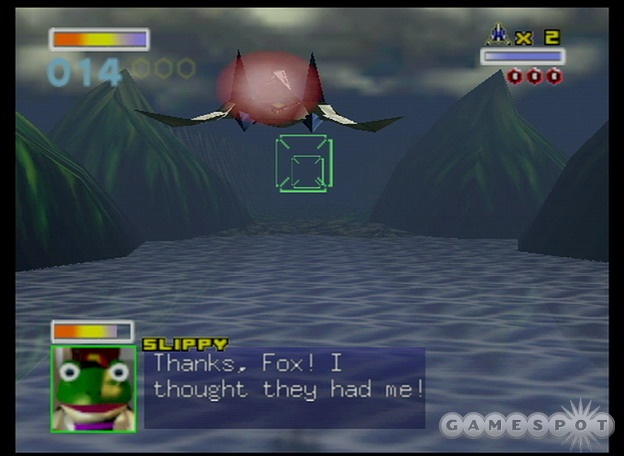
Flight games are video games that focus primarily on the flight. Occasionally there are games like Superman 64 that fall under the flight genre without piloting aircraft but most do. Very few games are solely flight games and most incorporate combat elements in a military style game. Some examples of these military flight shooters are Secret Weapons over Normandy, Starfox 64, War Thunder and even the Battlefield series has a military flight aspect to the game.
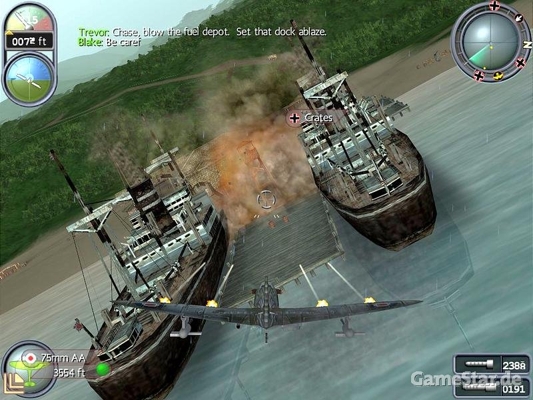
Secret Weapons over Normandy is a game made for the Playstation 2 by Totally games in 2003. It is set in World War 2 and you are an American member of the British Royal Air Force who must go on several missions across all of the war torn parts of the world at that time. You face off against members of the Luftwaffe and the Japanese Air force in a flying combat game.

The game aims to simulate military flight very accurately and includes things such as throttle control, stalling, banking, rolling, diving etc to make the experience feel genuine. This is coupled with realistic depictions of machine guns, bombs and WW2 missiles.

The game is aimed more toward a teenage to mature male audience as the WW2 theme is more popular with men rather than women. It's adult themes of war and death are also not suitable for young children.


Monday, 29 September 2014

Video game Visual Styles week 3


Visual Styles Sam Bizley
Photorealistic style
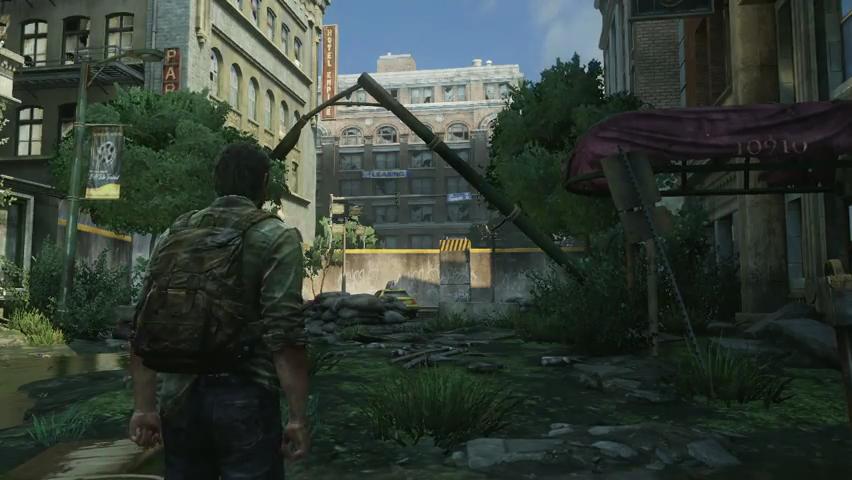
This style is the most demanding and time consuming style to produce. The idea of Photorealism is to depict real life objects with 3d graphics. It brings a very “cinematic” experience to the game and can be uses to give a realistic depiction of events or a lifestyle the player would not normally encounter. To create this style you would need many highly skilled artists to create the textures and models used in the engine. You will also need more powerful hardware to render the finished product due to the higher poly count and level of detail over other styles. A game that uses Photorealism is The Last of Us from Naughty Dog. The game utilises in an in-game engine and an engine developed by company Havok for physics.
Here is a screenshot from the game The Last of Us.

You can clearly see the realistic level of detail and real size proportions. The style is used to create a level of immersion and realism in a post apocalyptic fantasy world. This heightens the tension of the game and allows the player to become absorbed in its world by allowing a connection between real life and the game, in the visual style. With a realistic visual style I find that the player's level of empathy and attachment to the characters is greater than in any other style. Other examples of Photorealistic visual styles are LA Noire, Grand Theft Auto 5.


This screenshot from the game LA Noire shows the photorealistic style of the game. It uses this style to recreate a period of history (the 1920s) and add a fantasy element to it (serial killer murder mystery).

Cel-Shaded style

This visual style uses a hand drawn style to make 3d shapes appear 2d. It is fairly new visual style used a lot in Japanese Video games. It is often used to mimic the visual style of Comic books and Graphic Novels. It uses sharp lines to exaggerate things such as emotions and expressions on characters so it is very clear. The Walking Dead is a game made my Telltale Games in a creation tool called Telltale Tool. They use a cel shaded style to draw comparisons to the Walking Dead comic series. It is quite a simplistic style to use and allows for more story content to be created, while not sacrificing the ability to create recognisable characters and emotions. Some examples of this style are Naruto: Ultimate Ninja Storm, Borderlands, The Wolf Among us.
Here is a screenshot from the game The Walking Dead.
You can see the facial features are clearly drawn in black so that it is very obvious what the character is displaying emotionally. This ties in very well to the games theme of consequential actions and managing character's emotions. It creates a distinctly "cartoon like" theme but still resembles real life people and objects.
This is a screenshot from the game Borderlands from Gearbox Software. It uses the same cel shaded, cartoon style to depict a very different universe. It uses the exaggerated proportions and strong facial features to create a fantastical, futuristic universe.
Abstract
This style is a very unique style and is not based on any real life references. It usually uses vector drawn geometric shapes and is much more cost and time effective style to create. This style doesn't require a great deal of skill to make. Some abstract games use bright and vivid colours to capture the player's attention and create a sense of urgency. The original Space Invaders game could be considered an abstract art style game. It uses very simple shapes to depict unusual alien like images. It uses very bright colours and a black background to create a space theme and it compliments the very fast paced, arcade gameplay.
Another example of an abstract style game is Geometry Wars
As you can see there are a lot of bright polygons on the screen. This creates a feeling of urgent, reflex, moment to moment gameplay. The game is very fast paced and exciting which matches the vibrant style.

Exaggerated style
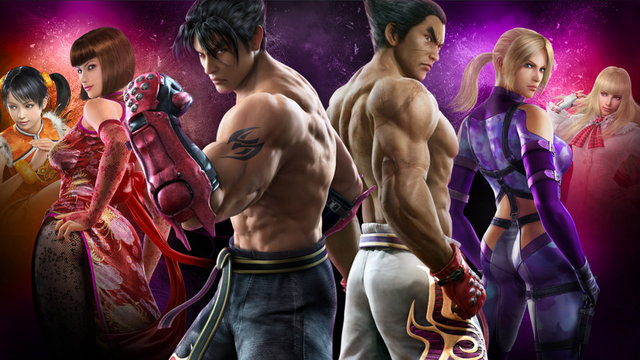
This style is more or less based around photorealism. It takes real life characters and objects and exaggerates and enhances them. Many Japanese games utilise this style to create almost "god like" protagonists and characters that are way beyond any realistic depiction. Tekken is a fighting game that's characters are all overly muscular with wacky hair cuts and striking clothes and Final Fantasy is a game that has similar overly muscular characters with gravity defying hair cuts and giant weapons. These games are examples of the very distinct Japanese style of many games. A good example of a more western game that uses exaggerated style is Rocksteady's Batman games. Here is a screenshot from the first game in the series, Arkham Asylum.
The characters in this screenshot are depictions of real people but massively exaggerated. Batman is literally meant to appear twice the size of another human being and even against this overly muscular enemy he is still the more muscular. All of his features including his facial features are enhanced to make him look more like the stereotypical protagonist.

Here is a screenshot of the game Tekken.
The male characters muscularity is exaggerated and they have profoundly masculine facial features whereas the women have very symmetrical feminine features and are somewhat overly sexualized.
Fluid Artwork style
The game Okami broke new ground by having a style that aimed to mimic real life paintings and Japanese calligraphy. It uses a distinctive cel shaded type style that uses a dynamic called the "Celestial Brush" where the player draws objects into the world which uses a calligraphy brush animation. The games visuals are very much inspired by Japanese folklore and history. The main character, that the player controls, is Amaterasu the Japanese sun god in wolf's form. The game aims to keep fluidity when playing the game and drawing in objects very much how real Japanese calligraphy is done. This contributes to a very sleek and flowing experience in both visual style and gameplay.

Notice the "brush stroke" textures making it appear like a painting.
Braid is a small indie game that was developed by Jonathan Blow and artists Mike Corriero and David Hellman. The games initial artwork took a year to complete and looks just like illustrations from a book. It is similar to Okami in that it attempts to recreate the feeling of a fluid painting, but does so in a slightly different way. Since the game is 2D rather than 3D it uses real artwork for animations and backgrounds.

As you can see from the screenshot it has a profoundly watercolour painting feel to the aesthetics.
This style could be considered a completely separate visual style than Okami but it is essentially the same idea with different visual planes. However it shows how vastly different the same style is when comparing 2D to 3D.

Rotoscope Animation
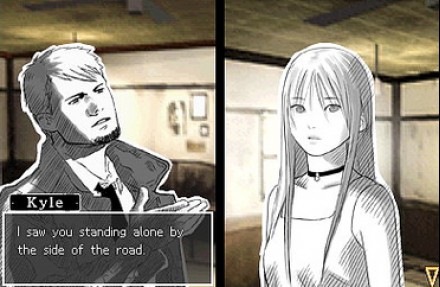
Rotoscoping is an animation technique where animators draw over live footage frame by frame. This technique is used in live action films and animated films. Hotel Dusk: Room 215 is a point and click puzzla game where the cutscenes are animated using Rotoscope animation. It is realistic art style that gives the illusion of looking like a pencil line drawing that has come to life and is a very interesting way of displaying characters.
You can see from this screenshot the distinctive pencil drawn style of rotoscoping. It gives a personality to the game and requires the artist to find different, more subtle ways of representing characters movements and emotions

Pixel Art

Pixel art is an artistic style characterised by editing images on a pixel level. It is a type of digital art that is created through using Raster image software. The modern use of this style aims to emulate the art from older games created in the 1980's and 1990's that was prevalent because of the limitations at that time. A fairly popular game that uses modern day pixel art is Fez by Polytron. Here you can see the deliberate use of very small square blocks(pixels) to give the game a retro feel. Fez uses pixel art to give the feeling of being inside a video game, while still retaining beautiful aesthetics.


Another example of modern day pixel art is the game Gods Will Be Watching by Deconstructeam.


Prince of Persia + original assassins creed + ico + shadow of the collossus

computer game graphics
-pixel art, 2d graphics, sprites
-concept art, weapons, characters, backgrounds
-texture art, materials such as stone, wood, gravel,
-background graphics, eg walls, forest, clouds
-in game interface, ie heads up display
-Print media art, eg game packaging, box cover, game manual, label, poster, advertisements

pixel

types of digital graphics
-Raster: BMP, GIF, TIFF, JPG
-Vector: PSD, WMF, FLA, AI

file extensions
compression
image capture
optimizing
storage of image assets

use subject terminology
add pictures, videos, examples
Perspective visual styles ie 2d, 3d, fps, platformer, top down.   
http://jahmelcoleman.wordpress.com/games-development/200-2/